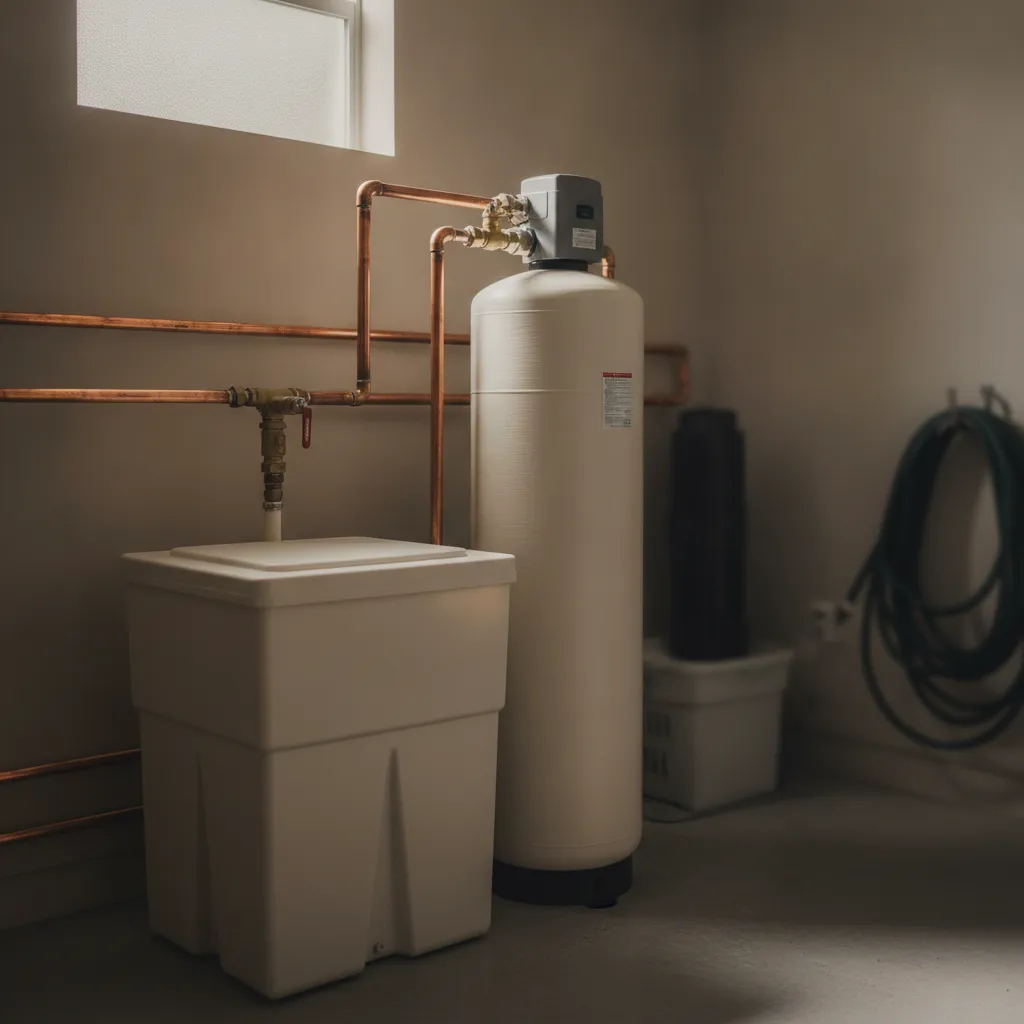
Best Water Softeners 2026: Certified Picks a Plumber Would Install
The best water softeners in 2026 are the handful that actually hold NSF/ANSI 44 certification from an accredited certifier — the GE GXSH40V for most houses, the Whirlpool WHES40E if you’re fighting iron, and the Kinetico Premier Series if budget isn’t the constraint. Most softeners sold online hold no performance certification at all.
Hard water is the most common water problem in American homes that nobody treats as a problem. USGS hardness data puts most of the central and western US in the hard-to-very-hard range, and municipal supplies in cities like Indianapolis, San Antonio, Phoenix, and Las Vegas routinely reach the tap at 10–20 grains per gallon. It won’t hurt you. It will absolutely hurt your water heater, your dishwasher, and your skin — scale on a heating element is the number one reason those appliances die young.
Here’s the part that should bother you more. Water softeners are one of the least-certified product categories I work in. There’s a real standard — NSF/ANSI 44, which verifies a cation exchange softener actually removes the hardness it claims, at the salt efficiency it claims — and most of the softeners sold online don’t hold it. They lean on “NSF-certified components” or “tested to NSF standards” and hope you don’t know the difference. You should.
This guide covers six systems: four with genuine NSF/ANSI 44 certification from an accredited certifier, one uncertified system that earns its spot honestly, and one salt-free alternative that isn’t a softener at all. If you’re not sure hardness is your problem, start with our hard water guide, then come back.
Quick Picks
- Best Overall: GE GXSH40V — certified by NSF International to NSF/ANSI 44 for hardness, barium, and radium, handles up to 110 grains per gallon, and costs what a softener should cost.
- Best Budget for Iron: Whirlpool WHES40E — NSF International certified to Standard 44 and rated for up to 10 ppm of clear-water iron, the best iron number in the certified big-box class.
- Best Premium: Kinetico Premier Series — WQA-certified to NSF/ANSI 44, twin-tank, and runs on water pressure instead of electricity. Dealer-installed, and priced like it.
FilterdWaterGuide is reader-supported. Some links on this page earn us a commission at no extra cost to you. We recommend products on certification and performance data — never on commission rate. Two of the six systems below pay us nothing.
How We Picked (and What We Cut)
Every softener here had to clear one bar: a finished-system certification to NSF/ANSI 44 from one of the three ANSI-accredited certifiers — NSF International, WQA Gold Seal, or IAPMO R&T — confirmed against the certifier’s own database listing, not the manufacturer’s marketing page. One exception made the list without it, and I say so plainly in that review.
Two cuts worth naming. Crystal Quest is an affiliate partner of this site at a 15% commission, and their softeners aren’t here — we could not verify a finished-system NSF/ANSI 44 certification for them, and on this site that’s the whole ballgame. Meanwhile Kinetico and Culligan earn us exactly nothing — no affiliate program for dealer-installed systems — and they both made the list because the certifications are real. Merit first, links second. That’s the order of operations every time.
GE GXSH40V — Best Overall
The certified softener that proves you don’t need to spend four figures.
| Spec | Detail |
|---|---|
| Price | Roughly $600–$700 at big-box retailers |
| Capacity | 40,200 grains |
| Max hardness | 110 grains per gallon |
| Clear-water iron | Up to 8 ppm |
| Certifications | NSF International: NSF/ANSI 44 (hardness, barium, radium reduction, efficiency rated), NSF/ANSI/CAN 372; WQA-certified against CSA B483.1 |
| Regeneration | Demand-initiated (SmartSoft usage prediction) |
Why we recommend it: The certification is the real thing. GE Appliances holds a live listing in NSF’s certified drinking water treatment unit database covering the GXSH40V — and it’s a broader listing than the price suggests, carrying certified barium and radium reduction alongside hardness and the efficiency rating. That’s the same claim set the dealer-installed units charge four figures for.
On paper it handles 110 grains per gallon. In the field that means there’s almost no residential water in America it can’t soften. The demand-initiated regeneration meters your actual usage instead of running on a dumb timer, and GE’s own numbers put the salt and water savings around 34–35% against its older timer-based models. Home Depot buyers rate it 4.4 out of 5 across thousands of reviews, and the complaints that do show up are mostly sizing and installation errors, not the valve.
Best for: Homeowners on municipal or moderately hard well water who want certified performance at the lowest real price in the category.
Where it breaks:
- Single-tank design. During regeneration you’re getting hard water, so it regenerates at 2 a.m. and you size it so that’s rare. Fine for most houses, a real limit for big families with round-the-clock water use.
- The standard warranty is short — one year on the appliance, longer only on the tanks. SpringWell covers its softener for life; GE makes you hope the control valve behaves after year one. That’s a Tuesday afternoon call I’ve taken more than once on ten-year-old units.
Check price at GE Appliances | Check on Amazon — also stocked at Home Depot and Lowe’s
Our rating: 4.5/5
Whirlpool WHES40E — Best Budget for Iron
Same certified backbone, better iron number.
| Spec | Detail |
|---|---|
| Price | Typically under $700 |
| Capacity | 40,000 grains |
| Household size | 1–6 people |
| Clear-water iron | Up to 10 ppm |
| Certifications | NSF International: NSF/ANSI 44 (hardness reduction, efficiency rated), NSF/ANSI/CAN 372; WQA-certified against CSA B483.1 |
| Regeneration | Demand-initiated |
Why we recommend it: NSF International certifies this system to Standard 44 for hardness reduction and salt efficiency — the same tier of certification as the GE, confirmed the same way. One naming note so you can check it yourself: NSF lists the system as WHES40, and WHES40E is the retail SKU you’ll see at Amazon and Lowe’s. Same unit.
The spec that separates it is clear-water iron: 10 ppm, the highest rating in the certified big-box class. If your well water leaves orange stains but a lab test shows the iron is dissolved (ferrous) rather than particulate, this unit handles more of it than anything else at the price. It’s manufactured and warranted by Water Channel Partners, the Minnesota OEM that holds the NSF certificate and builds softeners for several major brands — which tells you the guts are proven, commodity hardware.
One thing the GE listing has that this one doesn’t: barium and radium claims. If radium is why you’re softening, buy the GE.
Best for: Well owners with hardness plus moderate ferrous iron who don’t want to add a separate iron filter yet.
Where it breaks:
- Iron capacity on paper isn’t iron capacity in the field. Running near that 10 ppm ceiling will foul the resin bed years early — softener resin tolerates iron, it doesn’t like it. Above 3–4 ppm sustained, price a dedicated iron system from our well water filtration guide instead.
- Same single-tank, hard-water-during-regen limitation as the GE, and a similarly short standard warranty.
Check on Amazon | See it at Whirlpool Water Solutions
Our rating: 4.3/5
Kinetico Premier Series — Best Premium
Twin tanks, no electricity, certified by WQA — and you’ll pay for all three.
| Spec | Detail |
|---|---|
| Price | Dealer-quoted; expect several thousand dollars installed |
| Design | Twin-tank, non-electric, powered by water flow |
| Certifications | WQA Gold Seal: NSF/ANSI 44, NSF/ANSI 372, CSA B483.1 — including certified barium and radium 226/228 reduction |
| Regeneration | Demand-initiated, soft water available 24/7 |
| Sales channel | Authorized dealers only |
Why we recommend it: The Premier Series fixes the one structural weakness of every single-tank softener. While one tank regenerates, the other keeps softening, so there is never a window of hard water. No electronics to fail, no clock to reprogram after a power outage — the metering runs off water flow.
The WQA Gold Seal certification to NSF/ANSI 44 covers hardness plus barium and radium 226/228, which matters in the Midwest groundwater systems where radium is the actual reason to soften. Note that WQA is an accredited certifier, not a lab-for-hire — a WQA Gold Seal is a real certification with factory audits behind it, even though the product won’t appear in NSF’s own database. We have no affiliate relationship with Kinetico and no way to earn a dollar recommending it. It’s here because the engineering and the certification both check out.
Best for: Large households with heavy simultaneous water use, homes on radium-affected groundwater, and anyone who wants the system a plumber would put in his own house if money were no object.
Where it breaks:
- Dealer-only pricing, and it’s opaque. Quotes for an installed Premier system commonly land in mid-four figures, several times a big-box unit, and you can’t comparison-shop it online.
- Proprietary service. Parts and repairs run through the dealer network — you’re marrying the local dealer, and dealer quality varies by territory.
Find a Kinetico dealer — no affiliate relationship
Our rating: 4.4/5
Culligan High Efficiency (HE) — Best Smart Dealer System
The other dealer heavyweight, certified twice over.
| Spec | Detail |
|---|---|
| Price | Dealer-quoted; commonly several thousand dollars installed |
| Certifications | WQA-certified: NSF/ANSI 44, NSF/ANSI 372, CSA B483.1 — hardness, barium, radium 226/228 |
| Regeneration | Demand-initiated, proportional brining |
| Extras | App monitoring, salt-level alerts, leak detection options |
| Sales channel | Authorized dealers only |
Why we recommend it: Culligan’s HE line carries WQA certification to NSF/ANSI 44 for hardness, barium, and radium reduction — the owner’s guide states it plainly — and the high-efficiency valve meters salt proportionally. It regenerates only the portion of the resin bed that’s actually exhausted. In the field that shows up as noticeably lower salt consumption than older timer units.
The app monitoring is the rare smart-home feature I’ll actually endorse: a salt-level alert beats discovering an empty brine tank three weeks after the fact. Full disclosure — this site has a Culligan affiliate relationship for pitchers and dispensers only. Dealer-installed systems like this one pay us nothing.
Best for: Homeowners who want certified performance with professional installation, ongoing local service, and remote monitoring.
Where it breaks:
- Same dealer-pricing opacity as Kinetico. Get the quote itemized and get a competing bid — the spread between Culligan territories on the same hardware can be four figures.
- Electronic valve and app features are more failure points than Kinetico’s non-electric design. More capability, more circuitry.
Find a Culligan dealer — dealer systems are not part of our affiliate program
Our rating: 4.2/5
SpringWell SS1 — Best Direct-to-Consumer (With a Caveat You Should Read)
Strong hardware and a lifetime warranty — but no performance certification, and we’re not going to pretend otherwise.
| Spec | Detail |
|---|---|
| Price | $1,495 direct |
| Capacity | 32,000-grain class, sized for 1–3 bathrooms (SS4 covers 4–6) |
| Service flow | 11 GPM |
| Certifications | None on the finished system. Component-level NSF materials certifications only |
| Warranty | Lifetime, with a 6-month money-back guarantee |
Why we recommend it: Let’s do the caveat first, because our own site got this wrong once. The SS1 holds no NSF/ANSI 44 certification. Not from NSF International — we checked the database directly and SpringWell returns nothing under Standard 44. Not from WQA. Not from IAPMO. What SpringWell has is NSF-certified components: the tanks and materials meet materials-safety standards. That is not a performance certification, and any page telling you otherwise is repeating marketing.
So why is it here? Because ion exchange is hundred-year-old chemistry, the SS1 runs proven commodity internals with a demand-metered valve, field reports on the SS series consistently show reliable softening with low callback rates, and the lifetime warranty plus 6-month return window is the strongest paper in this guide. GE and Whirlpool give you one year. You’re trading a certificate for a warranty. That’s a rational trade. It should just be an informed one.
Best for: Buyers who want a dealer-grade system without the dealer markup and value warranty length over certification.
Where it breaks:
- No NSF/ANSI 44 certification on the finished system. On a certification-first site, that’s not a footnote — it’s the reason this unit isn’t Best Overall despite the better warranty.
- Costs more than double the certified GE while making claims you have to take on the manufacturer’s word and field reputation rather than a certifier’s audit.
Check price at SpringWell — affiliate application pending; we currently earn nothing on this link
Our rating: 4.0/5
Aquasana SimplySoft — Best Salt-Free Alternative (Not a Softener)
For scale control where salt is banned, unwanted, or impractical.
| Spec | Detail |
|---|---|
| Price | Check current price — Aquasana discounts heavily most of the year |
| Technology | NAC (nucleation assisted crystallization) — conditions minerals, removes nothing |
| Scale reduction | 99.6% in DVGW W512 testing (manufacturer-commissioned) |
| Certifications | No NSF/ANSI 44 — the standard only applies to ion exchange. No US certification covers salt-free scale reduction |
| Maintenance | No salt, no drain, no electricity; media replacement on a multi-year cycle |
Why we recommend it: Read the spec table again, because this is the most misunderstood product type in residential water. SimplySoft is not a water softener. Your water leaves it exactly as hard as it entered — the NAC media converts dissolved hardness into microscopic crystals that mostly won’t stick to pipes and heating elements.
The 99.6% scale-reduction figure comes from testing to DVGW W512, a German protocol. There is no US ANSI standard for this technology, so no salt-free unit can honestly claim NSF/ANSI 44. Aquasana’s own copy calls the media “NSF certified,” which is true and beside the point — that’s a materials certification, not proof the system controls scale.
Here’s what actually happens when it’s installed: your water heater scales far slower, and your soap still won’t lather, your glasses still spot, and a hardness test strip reads exactly the same. If scale on appliances is your only complaint — or your city restricts softener brine discharge, as parts of California do — this is the honest fit. If you want soft water, buy a softener.
Best for: Scale protection in brine-restricted areas, vacation homes, and households that dislike softened water’s feel.
Where it breaks:
- Does not soften water, period. No help for soap scum, spotting, or dry skin, and marketing that calls it a “softener” earns the category a lot of returns.
- The 99.6% figure is manufacturer-commissioned testing to a German standard, not an accredited US certification. Treat it as a strong tested-to claim, nothing more.
Our rating: 3.9/5 (rated as scale control — as a “softener” it would rate lower)
Comparison Table
| Product | Price | Best For | Certifier + Standard | Certified Claims | Our Rating |
|---|---|---|---|---|---|
| GE GXSH40V | ~$600–700 | Best overall | NSF International: 44, 372 | Hardness, barium, radium, efficiency | 4.5/5 |
| Whirlpool WHES40E | <$700 | Budget + iron | NSF International: 44, 372 | Hardness, efficiency | 4.3/5 |
| Kinetico Premier | $$$$ dealer | Premium, 24/7 soft water | WQA: 44, 372, B483.1 | Hardness, barium, radium | 4.4/5 |
| Culligan HE | $$$$ dealer | Smart dealer system | WQA: 44, 372, B483.1 | Hardness, barium, radium | 4.2/5 |
| SpringWell SS1 | $1,495 | DTC, lifetime warranty | None (components only) | — | 4.0/5 |
| Aquasana SimplySoft | Varies | Scale control only | None (DVGW-tested) | — | 3.9/5 |
How to Choose a Water Softener
Test your hardness first
Sizing starts with a number, not a guess. A $10 strip kit gets you within a grain per gallon, which is enough. On well water, spend the $200 on a lab panel instead — you need iron, manganese, and pH anyway before you buy anything. Our home water testing guide walks through both.
Do the sizing math
Multiply people in the house by 75 gallons a day, times your hardness in grains per gallon, times 7 days. That’s your weekly grain load. Buy the capacity that regenerates about once a week.
Remember metered softeners hold 20–25% of capacity in reserve — a “40,000-grain” unit delivers closer to 30,000 per cycle in practice. Undersized softeners regenerate daily and wear out in half the time. That’s not a defect. That’s arithmetic.
Certified or not — know what you’re paying for
This is the distinction the whole category depends on. NSF/ANSI 44 certification means an accredited certifier — NSF International, WQA Gold Seal, or IAPMO R&T — verified the hardness and efficiency claims and audits the factory on an ongoing basis, with unannounced inspections and annual retesting.
“Tested to NSF standards” means somebody ran the unit through a lab once and nobody is checking anymore. “NSF-certified components” means the plastic won’t leach; it says nothing about performance. Neither one is certification.
Watch the certifier name too. A WQA or IAPMO certification is every bit as real as an NSF one, but those products won’t appear in NSF’s database — so a brand claiming “NSF certified” that you can’t find in NSF’s own listing is worth a second look. You can reasonably buy an uncertified softener with a great warranty, like the SS1. Just don’t do it by accident.
Salt-based vs. salt-free
Only ion exchange removes hardness. Salt-free conditioners manage scale and nothing else. If your complaint list includes soap, skin, spotting, or laundry — softener. If it’s strictly the water heater, or your municipality restricts brine discharge — conditioner. There’s no third option that does both without salt, whatever the ad copy says.
Plan the install like an adult
Softeners go on the main line, after the meter, before the water heater. You need a bypass valve, a drain within reach for regeneration discharge (salt-free units skip this), and a 120V outlet for most electric valves.
Use compression fittings. Saddle valves are a leak waiting for a holiday weekend, and local codes are increasingly banning them anyway. Big-box units are a competent DIY job with a helper; dealer units include install in the price. And if you’re also fighting chlorine, sediment, or iron, sequence the whole main line once using our whole house filter guide instead of bolting on boxes one at a time.
FAQ
Do water softeners remove lead or PFAS?
No. NSF/ANSI 44 covers hardness — calcium and magnesium — plus, on some certified systems, barium and radium. Lead reduction is a Standard 53 claim and PFAS reduction is a Standard 53 or 58 claim, and no residential softener carries either. If your annual water report or a lab test flags lead or PFAS, you need a certified filter, not a softener: start with our lead removal guide or PFAS filter guide. A softener can sit in front of either — they solve different problems on the same pipe.
Does soft water protect against lead in my plumbing?
It’s the opposite concern, actually. Aggressively softened water can be slightly more corrosive to old plumbing, and homes built before 1986 may have lead solder or brass fittings that corrosive water can leach. If your house predates 1986, test at the tap after installing a softener — and consider a certified NSF/ANSI 53 lead filter at the kitchen sink regardless. Testing is cheap; guessing isn’t.
Will softened water taste salty?
Almost never. At around 10 grains per gallon of hardness, ion exchange adds roughly 7.5 mg of sodium per 8-ounce glass — less than a slice of bread. If you can taste salt, the unit is over-regenerating or undersized. On a sodium-restricted diet, run potassium chloride in the brine tank or put a reverse osmosis system on the kitchen tap.
What size softener do I need?
People × 75 gallons × hardness (gpg) × 7 = weekly grains. A family of four on 15 gpg water is 31,500 grains a week — a 40,000-grain-class unit sized for weekly regeneration, once you account for the 20–25% reserve. Round up. Nobody has ever complained a softener regenerated too rarely.
Is a salt-free “softener” worth it?
If you understand what it is — a scale-control device, not a softener — yes, in the right house. Wrong reasons to buy one: soap scum, dry skin, spotting. Right reasons: brine discharge restrictions, no drain access, or scale being your only genuine complaint. No salt-free unit holds NSF/ANSI 44, because the standard doesn’t apply to the technology.
How long does a water softener last?
A properly sized salt-based unit runs 15–20 years. The resin bed is good for 10–15 and can be replaced separately for about $400. Control valves fail first, and they fail fastest on undersized units regenerating daily — which is a sizing problem wearing a warranty claim’s clothes.
Do I need a softener on city water?
Depends on the number, not the source. Municipal water in hard-groundwater regions — Phoenix, San Antonio, Indianapolis, Milwaukee — routinely arrives at 10–20 gpg. Check your city’s water report or dip a strip. Above 7 gpg, a softener starts paying for itself in appliance life; below that, it’s a comfort purchase.
Final Verdict
The GE GXSH40V takes Best Overall on the shortest possible argument: a live NSF International listing under NSF/ANSI 44 covering hardness, barium, and radium, capacity for any residential hardness in the country, and a price under $700.
For well water with iron, the Whirlpool WHES40E buys you the best certified iron rating in its class. If budget’s off the table, the Kinetico Premier Series is the softener I’d install in my own house — certified, non-electric, never a minute of hard water. And the SpringWell SS1 remains a defensible pick for warranty-first buyers, as long as you go in knowing it’s uncertified.
Softening is half of whole-house water strategy. The other half is filtration, and our whole house filter guide covers how the two fit together on one main line.
Sources
- NSF International Certified Drinking Water Treatment Units Database — GE Appliances (GXSH40V) and Water Channel Partners (WHES40) listings under NSF/ANSI 44, verified July 2026
- WQA Gold Seal certified product listings — Kinetico Premier Series and Culligan HE
- GE Appliances GXSH40V owner’s manual and performance data sheet (NSF/ANSI 44 certification statement)
- Whirlpool Water Solutions WHES40 performance data — manufactured and warranted by Water Channel Partners
- Kinetico Premier Series performance data sheet (WQA certification to NSF/ANSI 44, 372, CSA B483.1)
- Culligan High Efficiency softener owner’s guide — WQA certification to NSF/ANSI 44 for hardness, barium, radium 226/228
- Aquasana SimplySoft product documentation (DVGW W512 scale-reduction testing)
- USGS water hardness classification data
- Home Depot verified-buyer review aggregate for GE GXSH40V (4.4/5)