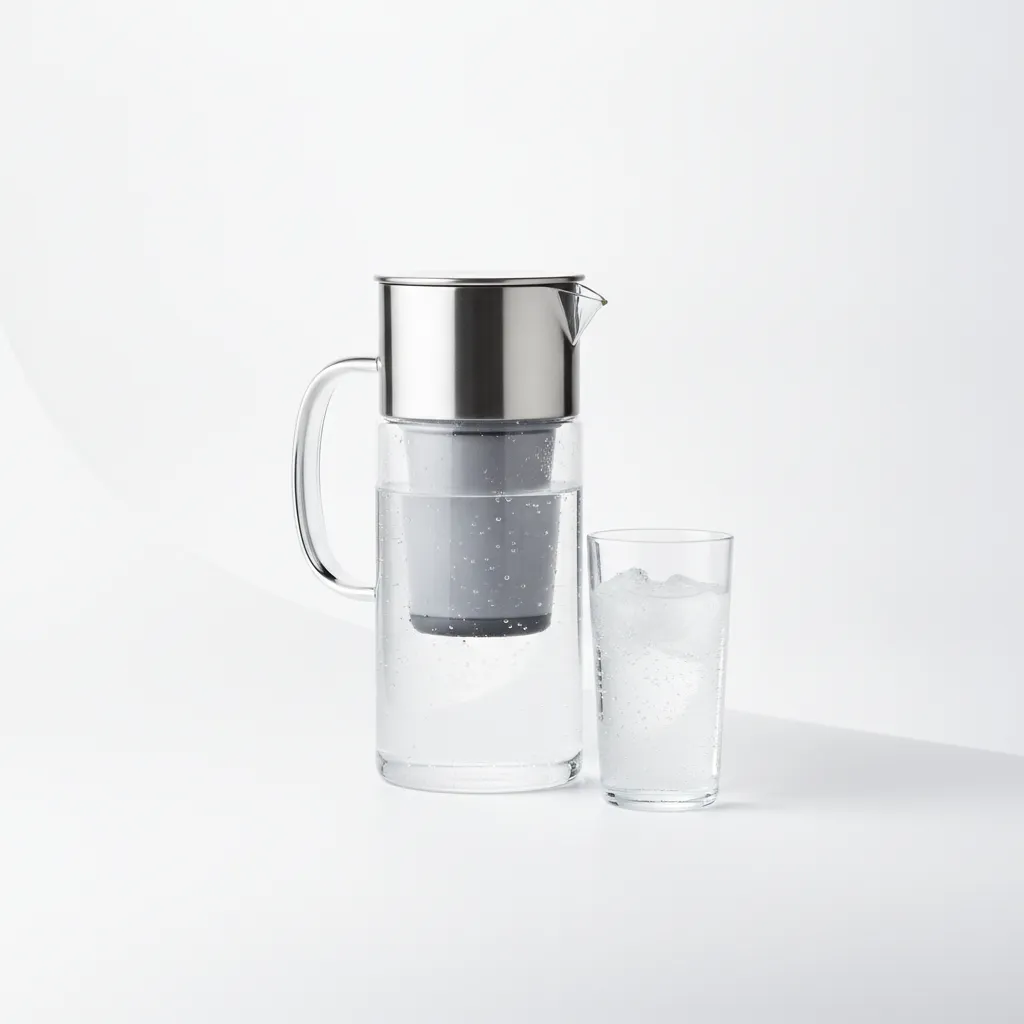
Best Water Filter Pitchers 2026: Only Certified Picks
LAST UPDATED: April 2026
The best water filter pitchers in 2026 are the ZeroWater 10-Cup (IAPMO-certified for both lead and PFAS), the Brita Elite/OB06 (certified for lead AND PFOA/PFOS — a rare combination at a mass-market price), and Clearly Filtered (broadest contaminant coverage). Most pitchers you’ll find on Amazon only remove chlorine taste. That’s it. They do almost nothing for lead, PFAS, or contaminants that pose actual health risks.
The question you should actually be asking isn’t “Which pitcher is best?” It’s “Which pitcher solves the problem I actually have?” Only a handful of pitchers sold in the US carry third-party certification (from NSF International, WQA, or IAPMO R&T) for both lead and PFAS removal. Every other pitcher — including household names that dominate the market — solves a taste problem, not a safety problem. This review is built around that distinction. Every certification claim was checked against the relevant certifier’s database directly. This guide is blunt about what the budget options can and can’t do because too many buyers purchase the wrong filter and discover six months later that it wasn’t protecting their family at all.
FilterdWaterGuide.com earns a commission from affiliate links in this article at no additional cost to you. This doesn’t influence my recommendations — I verify every claim against the certifier’s database and independent lab results, not marketing copy.
Who this is for: Renters, apartment dwellers, and homeowners who want filtered drinking water without installing anything under the sink. Worried about PFAS or lead specifically? This guide tells you which pitcher actually removes them — and which popular ones don’t.
QUICK PICKS:
- Best Overall (and Best for PFAS): ZeroWater 10-Cup — IAPMO-certified to NSF/ANSI 42 & 53 for both lead AND PFOA/PFOS (P473 incorporated into NSF/ANSI 53 in 2019). Reaches 000 PPM TDS. The certified PFAS pick and the honest budget winner for health-effect contaminant removal.
- Best Certified at a Mass-Market Price: Brita Elite (OB06) — One of very few pitchers certified for BOTH lead (NSF International, NSF/ANSI 53) and PFOA/PFOS (IAPMO R&T, NSF/ANSI 53). Cheap and everywhere — but its certified scope is the two regulated compounds, not broad-spectrum PFAS.
- Runner-Up (Broadest Coverage): Clearly Filtered Pitcher — Claims removal of 365+ contaminants on published lab data. Highest contaminant coverage on this list, but you pay for it.
- Best Flow & Filter Life: Epic Pure Pitcher — NSF-certified to Standard 42 (materials); fast flow and a long ~150-gallon filter life. Publishes strong PFAS lab data, but it’s tested, not certified — so this is a taste-and-throughput pick, not the certified PFAS choice.
- Budget Alternative: PUR Plus — WQA-certified to NSF/ANSI 42 and 53, solid lead reduction, zero PFAS coverage.
How We Evaluated These Pitchers
Certifications were verified through the relevant certifier’s database — NSF International (info.nsf.org), WQA (find.wqa.org), or IAPMO R&T (pld.iapmo.org). All three are accredited certifiers that test to the NSF/ANSI standards and provide ongoing oversight; a product certified by WQA or IAPMO is NOT listed in NSF’s database and should not be called “NSF certified.” Manufacturer claims don’t cut it. Several brands say “reduces PFAS” or “tested against PFAS standards” without actually carrying certification to NSF/ANSI 53 for PFAS — a lab “tested to” claim is not the same as certification.
Performance data comes from Tap Score independent testing, Consumer Reports evaluations, and community testing on r/watertreatment. Contaminant reduction claims were cross-referenced against published third-party results where available.
What was excluded: Alexapure pitcher filters didn’t make the cut. Independent testing showed 0% fluoride removal from their system, and their contaminant claims haven’t held up against third-party testing. Products where the marketing and the lab results disagree don’t belong in this guide. That’s a core editorial principle.
The Problem With Most Pitcher Filters
Activated carbon — the material inside virtually every pitcher filter — does one thing well: it removes chlorine, chloramines, and compounds that cause taste and odor issues. It does not meaningfully remove PFAS, lead, or most inorganic contaminants.
Here’s what nobody tells you. NSF 42 means chlorine taste and odor removal. NSF 53 means health-effect contaminants including lead. NSF 53 for PFAS (formerly the standalone P473 protocol, incorporated into NSF 53 in 2019) is the one that matters for PFAS — it covers both PFOA and PFOS, the most studied and regulated PFAS compounds. No NSF 53 PFAS certification? The pitcher hasn’t been independently verified to remove PFAS at levels that matter.
The Brita Standard pitcher — in American households for decades — is NSF 42 certified. It removes chlorine taste. It removes 0% PFAS. That’s not a flaw. It’s what the product was designed to do. The problem is most buyers don’t know this. They assume filtered water is filtered water. It isn’t.
The pitchers below do more. Some remove lead. Some remove PFAS. A few remove both. Those are the ones worth your money if water safety — not just taste — is the goal.
Best Water Filter Pitcher Reviews
ZeroWater 10-Cup — Best Overall
ZeroWater is the only pitcher on this list certified for both lead and PFOA/PFOS — IAPMO-certified to NSF/ANSI 42 & 53. (IAPMO R&T is an accredited certifier that tests to the NSF/ANSI standards; it is not NSF International, so this is not an “NSF” listing.) That makes it the most credentialed budget option for health-effect contaminant removal.
| Spec | Detail |
|---|---|
| Price | ~$30–$40 |
| Capacity | 10 cups |
| Certifications | IAPMO-certified to NSF/ANSI 42, 53 (incl. PFOA/PFOS), 401 |
| Contaminants Removed | Lead, PFAS (PFOA, PFOS), chromium, mercury, chlorine, and 99.6% of TDS |
| Filter Life | ~25–40 gallons (varies significantly by source water TDS) |
| Included | Free TDS meter |
Why it stands out: ZeroWater uses a 5-stage ion exchange filter that strips dissolved solids to 000 PPM TDS. That process removes ionic contaminants — lead, chromium, PFAS — effectively. The IAPMO certification to NSF/ANSI 53 (including PFOA/PFOS) provides ongoing third-party oversight. Consumer Reports rated its lead reduction among the strongest in the pitcher category. The included TDS meter tells you exactly when the filter is spent — no guessing about whether it’s still working.
Best for: Renters, apartment dwellers, or anyone with PFAS or lead concerns who wants a genuinely effective pitcher at a reasonable price. Strong choice near industrial sites or in homes with older plumbing.
Weaknesses:
- Filter life is short. As few as 25 gallons in high-TDS water. In mineral-heavy areas, you’re looking at $7-$10 per filter and 6-8 replacements per year. That adds up fast.
- The ion exchange process strips all dissolved minerals — calcium, magnesium, everything. Some people find the water tastes flat or slightly acidic. Not a health issue, but if your kids won’t drink it because it tastes weird, that’s a real problem. I heard from families who had to switch because their kids refused to drink the filtered water.
Our rating: 4.5/5
Brita Elite (OB06) — Best Certified at a Mass-Market Price
The Brita Elite filter (model OB06) is one of very few pitcher filters certified for BOTH lead and PFOA/PFOS — lead by NSF International (NSF/ANSI 53) and PFOA/PFOS by IAPMO R&T (NSF/ANSI 53, file 0013905). For a filter you can grab at any grocery store for the price of a few coffees, that’s a genuinely unusual credential. Just be clear on what the certification covers — and what it doesn’t.
| Spec | Detail |
|---|---|
| Price | ~$10–$15 per filter (fits standard Brita pitchers/dispensers) |
| Capacity | Pitcher-dependent (Brita Standard/dispenser housings) |
| Certifications | NSF International, NSF/ANSI 53 (lead); IAPMO R&T, NSF/ANSI 53 for PFOA/PFOS (file 0013905); NSF/ANSI 42 (chlorine) |
| Contaminants Removed | Lead, PFOA/PFOS (certified); chlorine, mercury, cadmium, benzene, certain others |
| Filter Life | ~120 gallons (~6 months) |
| Included | Filter only (drops into Brita pitchers you likely already own) |
Why it stands out: Two things, and they’re rare together. First, it’s actually certified — not “tested” — for both lead and PFOA/PFOS, the two PFAS compounds that are the most studied and the ones EPA regulates. The lead cert is held by NSF International itself; the PFOA/PFOS cert is held by IAPMO R&T (file 0013905). Both are accredited certifiers with ongoing oversight, so these aren’t one-time lab numbers. Second, it’s everywhere and it’s cheap. If you already own a Brita pitcher, upgrading to the Elite filter is the lowest-friction way to get a certified lead-and-PFAS reduction claim into your kitchen. No new hardware, no specialty order.
Best for: Budget-conscious households on city water who specifically want a certified lead and PFOA/PFOS claim without paying premium-pitcher prices — and who already own a Brita pitcher or dispenser. A sensible first step if your water report flags lead or shows PFOA/PFOS specifically.
Weaknesses:
- The certification is for PFOA and PFOS — not “PFAS” as a broad category. Independent testing by the Environmental Working Group found the Elite filter reduced only about 22% of TOTAL PFAS across the wider family of compounds. So if your concern is a broad PFAS profile — GenX, PFBS, PFHxS, the short-chain compounds — this filter is certified for two of them, not the whole class. For broad-spectrum PFAS, ZeroWater (certified PFOA/PFOS plus full ion exchange) or a reverse osmosis system is the more thorough answer.
- It’s a mass-market carbon-and-ion-exchange filter, not a heavy-duty specialty unit. It won’t touch fluoride, arsenic, or the long contaminant lists that Clearly Filtered publishes data for. You’re buying it for the two things it’s certified to do — lead and PFOA/PFOS — at a low price, not for breadth.
- There’s no Brita affiliate program, so the only way we can link it is through Amazon — fair warning that you may find it cheaper in-store.
Our rating: 4.0/5
Clearly Filtered Pitcher — Runner-Up
Clearly Filtered claims removal of 365+ contaminants with third-party lab testing to back it up. It’s the most comprehensive filtration pitcher you can buy — and the price reflects that.
| Spec | Detail |
|---|---|
| Price | ~$90–$100 |
| Capacity | 10 cups |
| Certifications | WQA-certified to NSF/ANSI 42 (chlorine) + 372 (lead-free materials) only; lead, PFAS, and the broader list are manufacturer lab-tested, not certified |
| Contaminants Removed | 365+ claimed (lab-tested) including PFAS, lead, fluoride, arsenic, chromium-6, pharmaceuticals |
| Filter Life | ~100 gallons (~4 months) |
| Included | Filter, user guide |
Why it stands out: Clearly Filtered publishes more third-party test data than any other pitcher brand. Their lab results show high-percentage reduction across contaminants most pitchers ignore entirely — fluoride, arsenic, pharmaceuticals. Follow the money: Clearly Filtered has no parent company making cheaper alternatives, so they can’t undercut their own product like some bigger brands do. If you’re dealing with multiple contaminant concerns, that breadth matters. The 100-gallon filter life is also substantially better than ZeroWater’s, which brings down your per-gallon cost.
Best for: Households facing multiple contaminant issues — PFAS plus fluoride or arsenic — who want maximum coverage in a pitcher and will pay the premium.
Weaknesses:
- Watch the certification scope. Clearly Filtered is WQA-certified to NSF/ANSI 42 (chlorine) and 372 (lead-free materials) only — NSF/ANSI 372 covers the materials, not contaminant removal. Its lead and PFOA/PFOS results are manufacturer lab-tested, not certified (the brand is mid WQA→NSF transfer). “Tested to a standard” is not the same as certified to it. Their results look credible, but if you need a certified lead or PFAS removal claim, this pitcher does not carry one today.
- The math: $90-$100 for the pitcher, $20-$25 per replacement filter. If you’re filtering high volumes, calculate your annual cost before committing.
Note: Verify current ASIN before purchase — Clearly Filtered updates product listings periodically.
Our rating: 4.3/5
Epic Pure Pitcher — Best Flow & Filter Life
Epic Pure is NSF-certified to Standard 42 (materials) only. Its PFAS, lead, and fluoride reduction come from the manufacturer’s published lab data — these are tested, not certified, so this is not the certified PFAS pick. Where it genuinely wins is throughput: it filters faster and lasts far longer than most high-performance pitchers, which makes it a practical daily-use option for higher-volume households.
| Spec | Detail |
|---|---|
| Price | ~$50–$65 |
| Capacity | 10 cups |
| Certifications | NSF-certified to Standard 42 (materials) only; PFAS, lead, and fluoride are manufacturer lab-tested, not certified |
| Contaminants Removed | PFAS (PFOA, PFOS), lead, chlorine, VOCs, heavy metals — per manufacturer lab data |
| Filter Life | ~150 gallons (~3 months) |
| Included | Filter |
Why it stands out: Flow and filter life. Epic Pure pours faster and lasts far longer than ZeroWater — 150 gallons versus 25-40 — so you refill less and swap filters less. If you’ve tried ZeroWater and got tired of the slow flow or constant filter changes, Epic Pure is a practical alternative for everyday taste-and-chlorine duty. It does publish extensive third-party lab data showing PFAS and lead reduction, which is worth reading. But be clear on the tier: unlike ZeroWater and the Brita Elite, Epic’s PFAS and lead numbers are lab-tested, not certified. Its NSF certification covers materials (Standard 42), not removal. So we recommend it for throughput and taste, not as a certified PFAS or lead solution.
Best for: Higher-volume households that refill frequently and want speed and a long filter life, where ZeroWater’s slow flow or replacement costs are deal-breakers. If you want a certified lead or PFAS claim, choose ZeroWater or the Brita Elite instead.
Weaknesses:
- Epic Water Filters is a smaller brand. Replacement filters can be harder to find locally, and the company has less market history than ZeroWater or Brita. That’s a real consideration if you need reliability and availability over time.
- The PFAS and lead claims are lab-tested, not certified. ZeroWater carries an IAPMO certification to NSF/ANSI 53 for lead and PFOA/PFOS, and the Brita Elite is certified for both as well; Epic does not. On a certification-first basis, those two are the stronger choices if you specifically want a certified removal claim.
Buy Direct from Epic Water Filters (save 15% with code `FILTERD15`) | Check on Amazon
Our rating: 4.2/5
PUR Plus — Budget Alternative
PUR Plus is WQA-certified to NSF/ANSI 42 and 53 for chlorine and lead. Straightforward, cheap, and honest about what it does. No PFAS coverage.
| Spec | Detail |
|---|---|
| Price | ~$25–$35 |
| Capacity | 7–11 cups (model-dependent) |
| Certifications | WQA-certified to NSF/ANSI 42, 53 (and 401) |
| Contaminants Removed | Chlorine, lead, mercury, certain pesticides |
| Filter Life | ~40 gallons (~2 months) |
| Included | Filter |
Why it stands out: PUR Plus delivers WQA-certified filtration to NSF/ANSI 42 and 53 at one of the lowest prices on this list. (WQA Gold Seal certification carries the same NSF/ANSI standards and ongoing oversight; it just isn’t an NSF International listing.) For renters on city water who want lead reduction and better taste — and don’t have PFAS concerns — it does what it says. No more, no less.
Best for: Budget buyers on city water with good baseline safety who want certified lead and chlorine reduction for under $35.
Weaknesses:
- That 40-gallon filter life is brutal. Fill the pitcher twice a day and you’re swapping filters every three weeks. That’s 16-17 changes per year at $8-$10 each. The annual cost is higher than the sticker price suggests. When I calculated it for households I knew, the true cost surprised them.
- Zero PFAS coverage. No NSF 53 (PFAS) certification, no published PFAS test data. If PFAS matters to you, look elsewhere.
Note: Verify current PUR Plus ASIN before purchase.
Our rating: 3.3/5
Pitcher Comparison Table
“Certified” = listed by NSF, WQA, or IAPMO. “Tested” = manufacturer lab data only. “Materials” = NSF/ANSI 372 or Std 42 materials cert (not removal).
| Product | Price | Certifier | NSF/ANSI 42 | NSF/ANSI 53 (lead) | 53 (PFOA/PFOS) | Filter Life | Rating |
|---|---|---|---|---|---|---|---|
| ZeroWater 10-Cup | ~$35 | IAPMO | Certified | Certified | Certified | 25–40 gal | 4.5/5 |
| Brita Elite (OB06) | ~$10–$15/filter | NSF + IAPMO | Certified | Certified (NSF) | Certified (IAPMO) | 120 gal | 4.0/5 |
| Clearly Filtered | ~$95 | WQA | Certified | Tested | Tested | 100 gal | 4.3/5 |
| Epic Pure | ~$60 | NSF (materials) | Certified (materials) | Tested | Tested | 150 gal | 4.2/5 |
| PUR Plus | ~$30 | WQA | Certified | Certified | No | 40 gal | 3.3/5 |
Note on the Brita Elite: its PFOA/PFOS certification covers those two compounds specifically. Independent EWG testing showed only ~22% reduction of TOTAL PFAS across the broader family — so “certified for PFOA/PFOS” is not the same as “broad-spectrum PFAS removal.”
How to Choose a Water Filter Pitcher
Start With Your Water Report, Not the Marketing
Before you pick a pitcher, look up your water source in the EWG Tap Water Database and pull your municipality’s Consumer Confidence Report. Those two documents tell you what’s actually in your water and at what levels. That drives the certification you need.
No PFAS detections and lead below 5 ppb? PUR Plus will probably cover you for taste and basic lead reduction. PFAS detections or older home with lead solder? You want certification to NSF/ANSI 53 for PFAS and lead — among the picks here, that means ZeroWater (IAPMO-certified for both) or the Brita Elite (NSF-certified for lead, IAPMO-certified for PFOA/PFOS). One caveat on the Brita Elite: its PFAS certification covers PFOA/PFOS specifically, and independent EWG testing put its total-PFAS reduction around 22% — so for a broad PFAS profile, ZeroWater or a reverse osmosis system is more thorough. Epic Pure is a throughput-and-taste pick, not a certified-removal one. How to test your water at home
Understanding NSF 53 for PFAS: The Certification That Matters
NSF 53 for PFAS is the certification for PFAS removal in drinking water treatment units. (You may still see this referred to as “NSF P473” — the standalone P473 protocol was officially absorbed into NSF 53 in 2019.) It tests for PFOA and PFOS reduction — the two most studied PFAS compounds. Filters with this certification have been tested by an independent lab and verified to reduce PFAS at health-relevant concentrations.
When a manufacturer says “reduces PFAS” but only publishes its own lab data — without an actual certification to NSF/ANSI 53 for PFAS — that claim hasn’t been audited on an ongoing basis by an outside body. Among the picks here, two carry a certification to NSF/ANSI 53 for PFOA/PFOS: ZeroWater (IAPMO) and the Brita Elite/OB06 (IAPMO, file 0013905). One nuance on a certified PFOA/PFOS claim: it verifies reduction of those two compounds, not necessarily the broader PFAS family. The Brita Elite is a good example — certified for PFOA/PFOS, yet independent EWG testing measured only ~22% reduction of total PFAS. Epic Pure publishes strong lab data but is not certified for PFAS (its NSF certification is for materials, Standard 42). That distinction — certified versus tested-to, and PFOA/PFOS versus total PFAS — is the one that matters.
The Real Cost of Filter Replacements
The pitcher price is the small part. Filter replacements are where the money goes:
| Pitcher | Filter Life | Filter Cost | Annual Cost (est.) |
|---|---|---|---|
| ZeroWater 10-Cup | 25–40 gal | ~$8–$10 | $60–$120 |
| Brita Elite (OB06) | 120 gal | ~$10–$15 | $20–$30 |
| Clearly Filtered | 100 gal | ~$25 | $75 |
| Epic Pure | 150 gal | ~$18 | $45–$60 |
| PUR Plus | 40 gal | ~$9 | $80–$100 |
ZeroWater’s costs swing the most. Filter life depends on incoming TDS. Soft water? Filters last longer. Hard water? They burn through fast. How often to change your water filter
Pitcher vs. Under-Sink Filter: When to Upgrade
A pitcher works well for 1-2 people. Once you’re filling it multiple times a day for a larger household, or dealing with serious contamination, an under-sink filter becomes cheaper per gallon and more effective. Best under-sink water filters 2026
Frequently Asked Questions
Which pitcher filter is best for lead removal?
ZeroWater. Its 5-stage ion exchange process produces the strongest lead reduction of any pitcher here, backed by IAPMO certification to NSF/ANSI 53. Ion exchange targets dissolved ionic lead — the form that leaches from pipes — more effectively than the activated carbon in PUR Plus. If you want a certified lead claim for far less money, the Brita Elite/OB06 is NSF-certified to NSF/ANSI 53 for lead (and IAPMO-certified for PFOA/PFOS) and runs about $10-$15 per filter. PUR Plus is also certified for lead (WQA, NSF/ANSI 53), but its carbon mechanism is less thorough for ionic heavy metals.
Is ZeroWater worth the high replacement filter cost?
If your water has PFAS or lead, yes. ZeroWater is the cheapest pitcher here that’s certified (by IAPMO, to NSF/ANSI 53) for both lead and PFOA/PFOS. If your water is safe and you just want better taste, no — the short filter life makes PUR Plus a better value for that use case. Check the EWG Tap Water Database for your zip code before deciding.
What’s the difference between NSF 42 and NSF 53?
NSF 42 covers aesthetics — chlorine taste and odor. NSF 53 covers health-effect contaminants — lead, VOCs, cysts, and PFAS (PFOA and PFOS), which was previously covered under the separate P473 protocol (incorporated into NSF 53 in 2019). You want certification to NSF/ANSI 53 with PFAS coverage for a pitcher that addresses real health concerns. Among the picks here, ZeroWater is certified to NSF/ANSI 53 for lead and PFOA/PFOS (via IAPMO), and the Brita Elite/OB06 is certified to NSF/ANSI 53 for lead (NSF International) and PFOA/PFOS (IAPMO) — though the Brita’s certified PFAS scope is those two compounds, not total PFAS. Epic Pure publishes strong PFAS lab data but is not certified for PFAS — its NSF certification is for materials only (Standard 42).
Does filtered pitcher water remove fluoride?
Most pitchers don’t touch fluoride. ZeroWater, PUR — none of them remove it effectively. Fluoride is a small anion that slips past activated carbon and standard ion exchange. Clearly Filtered is the exception: their third-party data shows significant fluoride reduction. Beyond pitchers, reverse osmosis under-sink systems handle fluoride at higher volumes.
Final Verdict
The ZeroWater 10-Cup is my top pick — and my certified PFAS pick — for any household where PFAS or lead is a real concern. It’s the pitcher I’d reach for first because it carries independent, unit-level certification (IAPMO, to NSF/ANSI 53) for both lead and PFOA/PFOS and strips dissolved solids through full ion exchange. The TDS meter shows you exactly when the filter is done — no guessing. Yes, replacement filters cost more and don’t last as long. That’s the trade-off for filtration that actually works.
If you want a certified lead-and-PFOA/PFOS claim without the premium, the Brita Elite (OB06) is the value play — certified by NSF International for lead and by IAPMO for PFOA/PFOS, at roughly $10-$15 a filter that drops into a pitcher you may already own. Just hold the expectation honestly: it’s certified for those two regulated compounds, and independent EWG testing measured only ~22% total-PFAS reduction. Great for lead and PFOA/PFOS on a budget; not a broad-spectrum PFAS solution.
Clearly Filtered takes runner-up on contaminant breadth alone — 365+ contaminants on published lab data. Its certified scope is narrow (WQA to NSF/ANSI 42 + 372 only; lead and PFAS are tested, not certified), which is worth noting, but the test results are extensive.
Want speed and a long filter life for a busy, high-volume kitchen? The Epic Pure (save 15% with code `FILTERD15` direct from Epic) pours fast and lasts ~150 gallons — just treat it as a taste-and-throughput pick, since its lead and PFAS numbers are lab-tested, not certified.
For city water households where taste and basic lead reduction are the goal and PFAS isn’t a concern, PUR Plus handles that at a low per-gallon cost.
Sources
- NSF International Certified Drinking Water Treatment Units Database — info.nsf.org/certified/dwtu/
- IAPMO R&T Product Listing Directory — pld.iapmo.org
- WQA Product Certification Records — find.wqa.org
- EWG Tap Water Database — ewg.org/tapwater
- Consumer Reports: Water Filter Pitcher Ratings and Testing
- Tap Score Independent Water Testing — tapscore.com
- ZeroWater IAPMO certification to NSF/ANSI 42 & 53 (PFOA/PFOS) documentation
- Brita Elite/OB06 certification: NSF International (NSF/ANSI 53, lead) + IAPMO R&T (NSF/ANSI 53, PFOA/PFOS, file 0013905)
- Environmental Working Group (EWG) independent pitcher-filter PFAS testing (Brita Elite ~22% total-PFAS reduction)
- Epic Water Filters third-party lab test results (not a certification)
- Clearly Filtered third-party lab test results
- Reddit r/watertreatment pitcher filter discussions